Knowledge Base - Buying Real Estate in Thailand
Videos about property and more


FAQ - Real Estate Questions in Thailand
Yes. Villas and land — on a leasehold basis (a long-term lease). Condominium units — either leasehold or freehold, within the 49% foreign-ownership quota of a condominium building.
Thai law reserves land ownership (freehold) for Thai citizens. This is a national principle that applies to all foreigners. For us, however, this is not an obstacle, but merely a starting point – which is why a leasehold system is utilized, granting full rights to the use of the property.
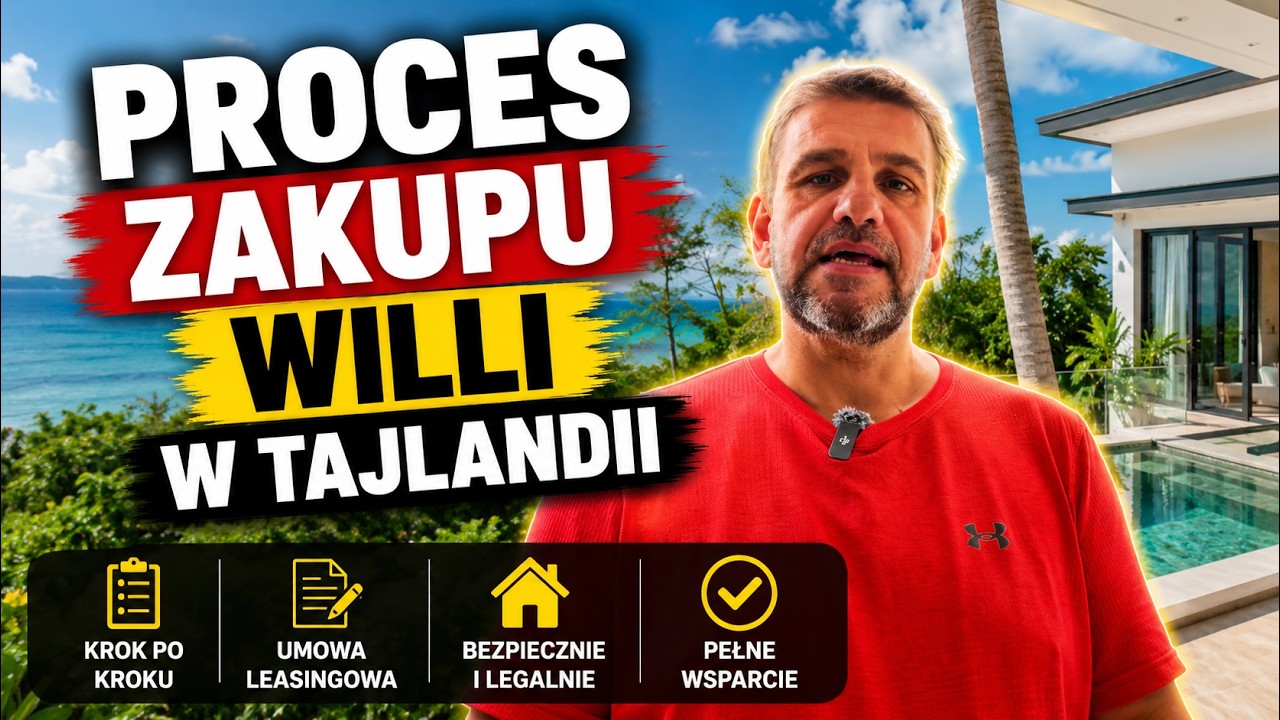
Yes. Leasing (leasehold) is a legal, proven, and very popular form of property acquisition for foreigners in Thailand. The leasehold right is registered with the government office and entered into the land registry, ensuring it is formally secured rather than based solely on trust or verbal agreements.
30 years are guaranteed by law, with renewal clauses extending it realistically to around 90 (a 30+30+30 scheme). Keep in mind, though, that the 30 years are guaranteed only once the agreement is registered with the land office.
Reservation plus 4-5 installments linked to key construction stages: contract signing, foundations, structural completion, roofing, and final finishing. You pay for actual progress, not upfront. Detailed amounts may vary slightly depending on the specific project and developer.
Realistically 12-18 months. Good contracts include penalties for delays on the developer's part and a firm completion date.
Unlike in Europe, there are no purchase taxes here. The cost of lease registration depends on its value and, together with the lawyer's fee, typically amounts to approximately 60,000 THB (approx. 6,800 PLN). With a lease, there are no other costs or taxes. We outline the entire budget before your decision to ensure there are no surprises.
The best options are Revolut, Zen or Wise — that way you don't lose money on currency conversion. You can also send USD or EUR, but then the Thai bank will charge a fee to convert it into THB. So it's most cost-effective to send directly from a platform that offers a good exchange rate.
In practice, such a scenario is highly improbable. For a Thai landowner, a lease represents an excellent, stable business – providing regular income without the sale of the land. Furthermore, renewing with a proven, paying tenant is significantly more advantageous for them than seeking a new one. The crucial aspect lies in how the agreement is structured – and this is precisely why we meticulously review every contract, sentence by sentence, before signing, to ensure your right to renew is unequivocally secured.
Realistically 12–18% per year, depending on the project, location and management model. Some offers also come with a guaranteed return, e.g. 12%. We give concrete figures for a specific property with occupancy assumptions — not marketing promises.
Yes. We are permanently based on Koh Samui and serve as your dedicated on-site representative. We meticulously inspect projects, provide detailed recordings, verify construction progress, and expertly represent your interests where you are unable to be physically present.
How to buy a villa in Thailand without mistakes
My proven e-book on real estate in Thailand.
Write to us.
We reply within 2h (Mon–Sat, GMT+7).
Or go straight to WhatsApp to our sales team.
Polish, English, Thai. We reply within ~2 hours.
Message on WhatsApp+48 515 700 230